
Over the course of last year, Powering Past Coal Alliance (PPCA) Co-Chairs, the United Kingdom and Canada, and Bloomberg Philanthropies convened a series of Solutions Dialogues around the world. Bringing together government, business, finance and civil society leaders, the Dialogues helped boost momentum and empower countries to accelerate the phase-out of unabated coal power.
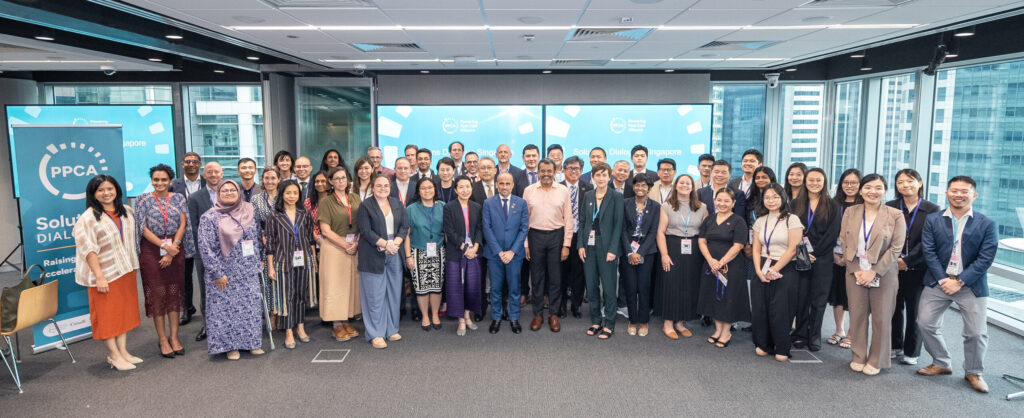
With Dialogues in the United Kingdom, Chile, Indonesia, the United States, the Philippines, Singapore, and Azerbaijan (at the UN Climate Summit COP29), the series saw over 450 participants from 54 countries and 220 organisations come together to announce new commitments on coal, showcase inspiring action, call for more ambition, and share practical solutions to the challenges of the early retirement of coal power plants, just transition and ensuring the security of electricity supply. The solutions were explored particularly in the context of the challenges faced by emerging and developing economies, where there are many young coal plants, the cost of capital is high, demand for electricity is rising rapidly, energy access and affordability are acute issues, and there is still a huge gap in infrastructure investment.
Below is a summary of the key outcomes of the Solutions Dialogues series.
Malaysia announces coal phase-out date, as leaders and investors call for new commitments to strengthen NDCs
One of the highlights of the Solutions Dialogues series was the announcement at the PPCA’s High Level Dialogue by Deputy Prime Minister of Malaysia, Fadillah Yusof, that the country will phase out coal by 2044 increasing momentum for coal phase out in the highly coal-dependent Asia Pacific region. At the same event in June 2024 at Battersea Power Station, London, leaders from government, international organisations and the private sector, including IEA Executive Director Fatih Birol, came together to call for action on coal phase-out. High-level attendees called on governments, financial institutions and companies to work together to provide practical expertise and finance that:
- Supports countries in their efforts to get on track for 1.5°C
- Enables countries to commit to no new coal
- Facilitates progress on coal phase out in country’s renewed Nationally Determined Contributions (NDCs) – due to be submitted by COP30.
This message on the importance of clear commitments to no new coal and coal phase-out was a key theme in all subsequent dialogues. Financial institutions, utilities and community stakeholders all stressed that government commitments give the certainty they need to plan for and invest in a future beyond coal power.

Countries demonstrate that an accelerated, affordable, and secure transition from coal is achievable
The Dialogues helped showcase the remarkable progress countries are already making on delivering a coal transition whilst supporting communities and maintaining an affordable, reliable electricity supply.
The UK – home to the world’s first coal power plant and the location of the first dialogue – phased out coal power completely from Great Britain’s energy mix in September 2024, with its dependence on coal for electricity dropping dramatically from 40% in 2012 to 0% in 2024. It has done so while maintaining a secure supply of electricity through an increase in wind and solar generation, investments in transmission infrastructure, and updating how the energy system is operated. In addition, clean energy projects are expected to create 650,000 well-paying jobs across the country by 2030 and the country is targeting clean power by 2030.
The province of Alberta in Canada phased out coal powered electricity in 2024, six years ahead of the 2030 target. Emissions from electricity generation in the province declined by 53% since 2004. Through the Coal Community Transition Fund, the Government of Alberta provided support to workers, communities and First Nations affected by coal phase-out in the electricity system. The Government of Canada supports coal-affected communities through the Canada Coal Transition Initiative, to mitigate the impact of the coal phase-out on workers, and the Canada Coal Transition Initiative Infrastructure Fund, to support affected communities with infrastructure to help diversify their economies.
Chile, where the second dialogue was held, is phasing out coal faster than any other emerging economy, with its proportion of electricity from coal dropping from 46% in 2013 to 17% in 2023. Its electricity generation from wind and solar has increased from 0.8% to 28% during the same time period. The Chilean national electricity coordinator (CEN) has committed to ensuring that it can effectively operate a 100% renewable grid by 2030.
Best practices emerge on energy planning, policies and regulations to implement a coal transition
The Dialogues facilitated the sharing of practical solutions governments were implementing to deliver on their coal commitments, while addressing the specific transition issues in their jurisdiction. These included:
- Early, transparent, and inclusive planning that engaged all relevant ministries in the government and stakeholders from industry, communities, workers, and civil society. Chile, for example, started its electricity sector transition planning in partnership with utilities in 2018, which helped create industry buy-in right from the start. Its recent decarbonisation plan, includes consultation with several ministries and external stakeholders.
- Policies and regulations that ensure true costs are accounted for, while providing reliable electricity supply from affordable clean sources. Colombia, for example, is implementing a carbon pricing scheme that progressively increases the coverage of emissions and includes coal-fired generation. The Philippines is implementing the priority dispatch of renewable resources, which encourages the use and deployment of cheap renewable resources over more expensive fossil fuels. This helps provide greater revenue certainty to renewable energy developers and power producers – a welcome signal for them to invest in the country.
- Just transition measures in collaboration with investors, industry and communities. In Colombia, private sector contractors and transmission line owners are investing in worker retraining, which helps address the shortage of skilled labour while enabling workers to build the skills necessary to take advantage of employment opportunities in the build out of transmission infrastructure.
Innovative finance mechanisms that can accelerate coal phase-out
While there are commendable coal transition actions being undertaken by governments, the Dialogues also highlighted the important role of finance in addressing the challenging nature of the transition in emerging and developing economies (EMDEs). Given the scale of financing required for EMDEs outside China to reduce emissions from Coal Fired Power Plants – estimated by the International Energy Agency (IEA) to be roughly $60bn annually, between 2022 and 2030 – there is a need to develop solutions that can mobilise public, private and innovative carbon finance.
The Solutions Dialogues discussed a number of the initiatives looking to develop and pilot new approaches to financing coal-to-clean transitions.
- In Chile, Engie was able to retire two units of the Tocopilla coal power plant and build out wind power thanks to support from a blended finance mechanism backed by the Climate Investment Fund alongside commercial investors.
- In the Philippines, ACEN closed a $314 million USD deal to sell its equity in the SLTEC coal plant to a ‘Special Purpose Vehicle’ (SPV) in order to access lower cost capital and hence plan to close the power plant earlier than expected. ACEN is proposing to further accelerate the transition by 10 years and to replace the facility with wind power using transition credits, making it one of the first projects to test the use of transition credits in this context.
The next task is to build on these pilot projects and rapidly scale support for coal-to-clean transitions. The dialogues made it clear that to do this as well as to scale public finance, we also need to continue to explore innovative financing mechanisms and encourage greater engagement from private finance.
To support this task and enable proactive involvement in the early retirement of coal plants, the PPCA launched its refreshed Finance Principles at the final Solutions Dialogue at COP29. These principles provide a contemporary, state-of-the-art framework for financial institutions to consider when independently taking action on the coal-to-clean transition, which may be situated within a robust coal policy (or similar). The Solutions Dialogues showcased several banks – including Standard Chartered Bank, DBS, UOB, SMBC and OCBC – who have already committed to invest in the transition. At the final Solutions Dialogue at COP29 in Baku, Standard Chartered affirmed this commitment by becoming a PPCA member.
What’s next?
The coal to clean transition is a challenging but necessary step to meet 1.5°C and must be included in national energy plans
The Solutions Dialogues made it clear that without an accelerated transition from coal power to clean we cannot meet the Paris Agreement’s goal of keeping global temperature increase to 1.5°C. The scale of the challenge is huge. The current global coal capacity is 2,130 GW, and phasing out this capacity by 2040 would require an average of 126 GW of coal plant retirements per year, or two coal plants per week. If any new coal power is added this will require even greater retirements.
These actions are particularly pertinent this year with countries developing their national energy plans and submissions for their Nationally Determined Contributions (known as NDCs) which are the key national-level tools to help implement paragraph 28 of the Global Stocktake (GST).
The PPCA will take forward several solutions through its on-going initiatives
In order to support the domestic action by governments as well as the international collaboration efforts to advance coal phase-out, the PPCA will build on the outcomes of the Solutions Dialogues, and:
- Continue to share the best practices from PPCA members and partners through workshops and our communications.
- Engage governments, experts and the finance sector through the work of the Coal Transition Commission (CTC) and the finance expert group in the coming year.The CTC aims to develop practical policy solutions to accelerate coal transitions globally, helping to outline how governments, public finance, and private finance can work together to move emerging economies away from coal.
- Continue in-country engagement on context-specific challenges. Next year the PPCA will continue to bring together its members and technical experts to support countries, financial institutions, utilities and subnational governments to find solutions that will work for the specific challenges each country faces.
- Expand the Call to Action on No New Coal to include additional countries whilst deepening our engagement and available support. The Call to Action was launched at COP29 and encourages all countries to end new coal power in the lead up to the 30th UN Climate Change Conference (COP30) in November 2025.
If you are interested in engaging with the PPCA on the above, please contact us. For updates on our work, subscribe to our newsletter.